
Have you ever wondered why your prospect ghosts you even though you have the perfect presentation, the numbers check out and the ROI is airtight?
Almost every time it has nothing to do with your data, but with their 'brain' 🧠! Our brain isn't a data processor. It's a storytelling machine. And the salespeople who understand that (and use it correctly) win!
The Data
Before we get practical, here's what the research says:
-
People remember story-based facts 22× more often than raw data points.
-
Information retention jumps from 5–10% to as high as 67% when data is paired with a story.
-
Neuroeconomist Paul Zak (Claremont Graduate University) found that emotionally resonant stories trigger oxytocin (the "trust hormone") directly increasing empathy and willingness to act in the listener.
This isn't a soft skill conversation. It's neurobiology. And it works at every stage of the sales process.
3 Best Practices
1. Cold Call: Replace the pitch with a story
Instead of starting with a feature, keep their attention with a short customer story. A concrete problem someone in a similar situation (trigger event) was dealing with, how your approach helped and what exactly changed after.
That creates instant relevance and you sound like a trusted advisor, not a salesperson.
Our PRO Tip:
The minimum: have one solid story ready for everyone.
The best: tailor it by role or industry. Calling a CFO? Tell a CFO story.
2. Discovery & Demo: Listening is storytelling too
Top performers speak only 45% of the time in discovery calls. The rest belongs to the prospect.
Because discovery means understanding the prospect's story, their problems, their language AND their emotions.
Same with your product demo. Don't sell features. Show a story:
"A company just like yours had exactly this problem. Here's what they did. Here's what came out of it." Then demonstrate how your solution made that path possible.
3. Negotiation: Narrative transportation as a lever
Negotiations often feel like a zero-sum game. Storytelling changes that dynamic.
When you tell a story that mentally places your counterpart inside a scenario, one where your offer gets them to their goals, you create cognitive and emotional immersion. Researchers call this narrative transportation.
The way we see works well is not to go straight into the numbers, but always start with a recap of their current goals, problems, pain points and your solution! Then and only then you start talking about their investment to make their dreams come true.
The result: less resistance, more openness to agreement.
Your Sales in DACH Ecosystem
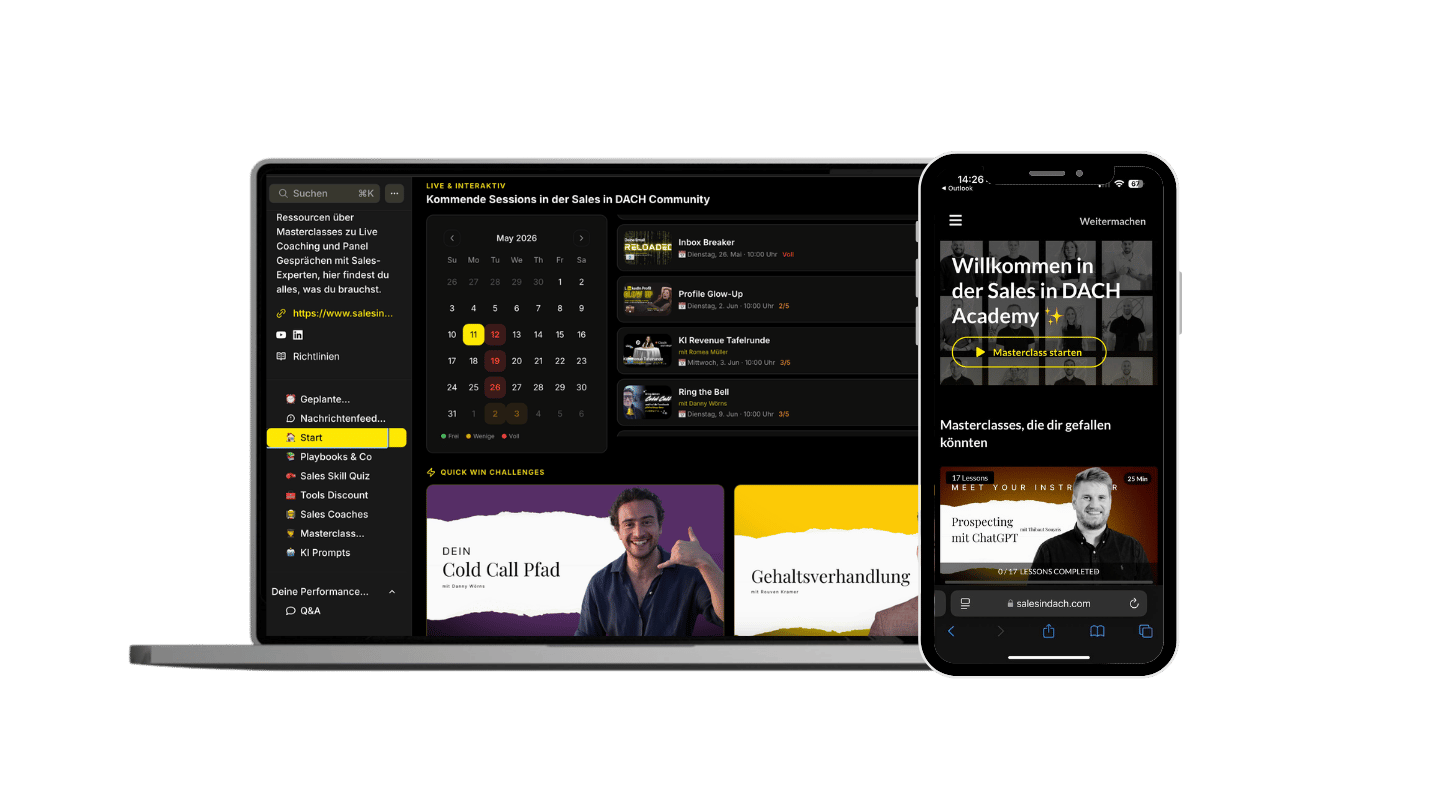
By the way, if you're not in the Sales in DACH Ecosystem yet, this is just one of the topics we dig into with our Masterclasses and Co ✨
Storytelling isn't a technique you learn once and tick off the list. It's a mindset shift: away from features, toward meaning. Away from data, toward context.
Try it on your next call and let us know how it went!
Your Sales in DACH Team ✨




Antworten